The Historic Dibar Dighi and the Dibyak Victory Pillar
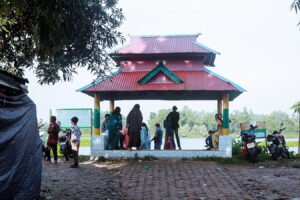
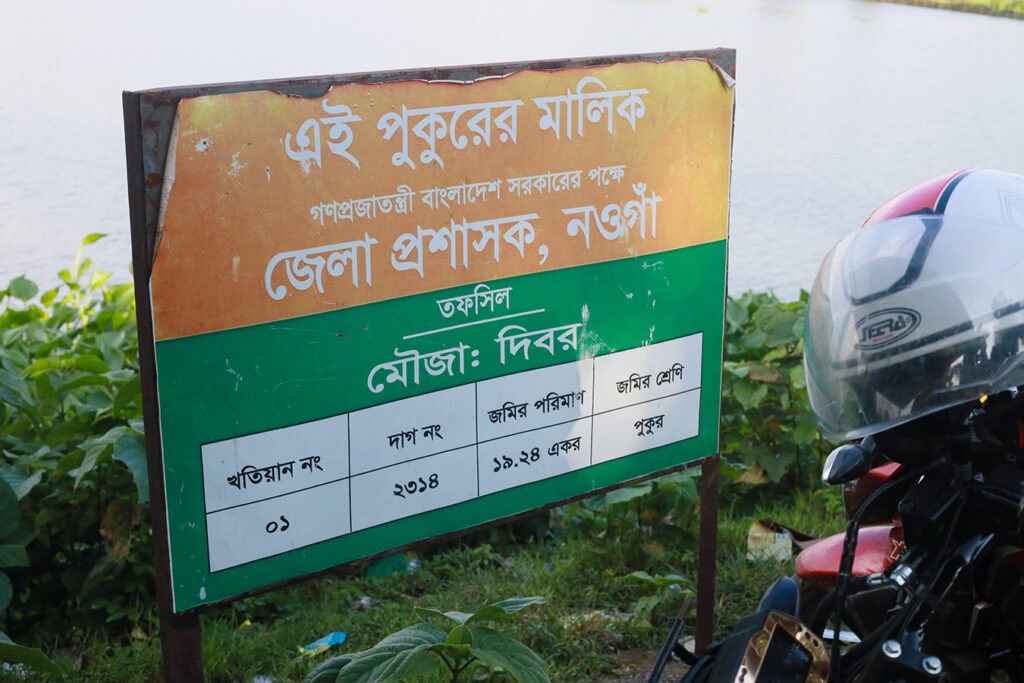
The historic Dibar Dighi is located in Dibar village of Dibar Union, Patnitala Upazila, Naogaon District, in the Barind region of Bangladesh. It is one of the important historic sites of the area.
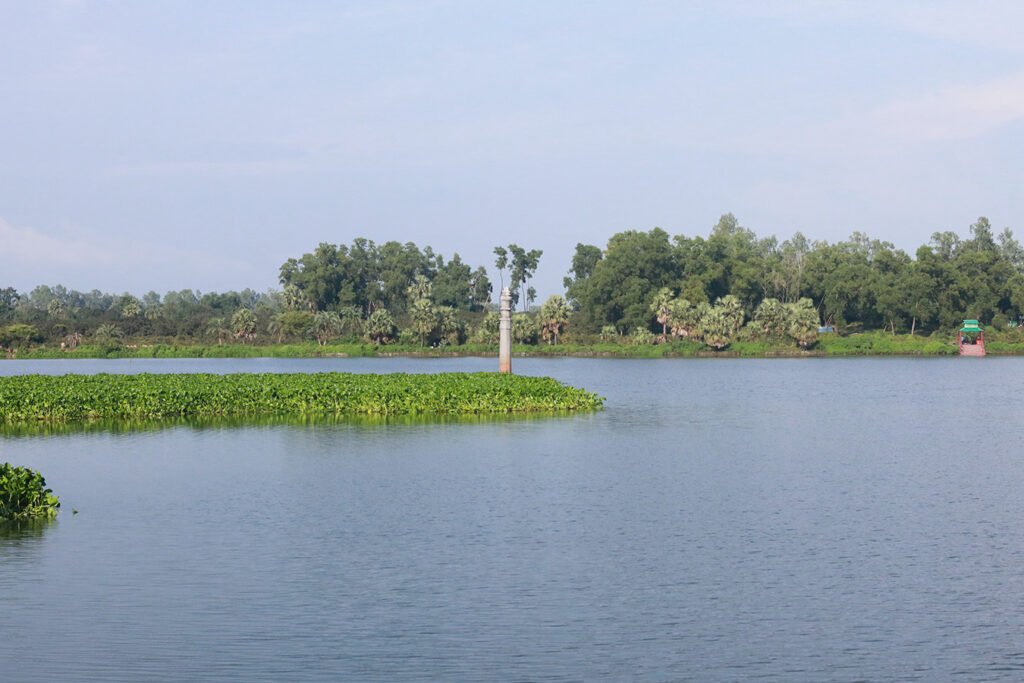
The dighi is about 18 km north-west of Patnitala Upazila headquarters. It covers about 20 acres and is almost square in shape. In the middle of the water stands a remarkable archaeological monument known as the Dibyak Victory Pillar. It has stood there for about a thousand years.
For hundreds of years, local people have told stories about Dibyak, the Kaivarta king, his brother Rudrak, also known as Rodak, and his nephew Bhima.
According to historical accounts, the Kaivartas established an independent territory in the Barind region during the rule of the Pala dynasty. This happened for about 25 to 30 years, from around 1070 to 1100 AD.
Around 1070–71 AD, Pala King Mahipala II tried to establish Pala control over the Kaivarta territory. He fought against the Kaivarta king Dibyak but was defeated in the Battle of Kaivartakhanda.
According to historian Dr Francis Buchanan-Hamilton, King Dibyak had this dighi built about a thousand years ago. The victory pillar in the middle of the dighi is believed to be a historical monument commemorating the Kaivarta victory over the Palas.
Dr Francis Buchanan-Hamilton visited Dibar Dighi in 1807–08. Archaeologist Sir Alexander Cunningham also visited the site in 1879. They examined the dighi and the victory pillar and recorded their observations about this important archaeological monument.
The dighi was completely drained for repair and restoration in 1985–86 and again in 2001. During these works, the pillar was examined more closely.
The victory pillar is made from a single piece of granite. It is about 32 feet long. Around 8 to 10 feet of it is below the ground, about 12 feet is below the water, and about 10 feet can be seen above the water.
The pillar has nine sides. Its diameter is about 29 inches. The distance from one corner to the opposite corner is about 1 foot, or 30 centimetres.
The pillar stands firmly on a large seven-layered base. The layers spread outward towards the bottom, somewhat like the foundation of a multi-storey building.
The upper part of the pillar has carved decorations. It has three raised circular bands, and the top has a crown-like decoration. However, no inscription or writing has been found on the pillar.
Dibar Dighi is about a thousand years old. The Dibyak Victory Pillar still stands proudly in its middle. It is regarded as a symbol of the courage and military strength of the Kaivartas, who once challenged Pala rule. It is also an important archaeological monument of our history.
Source
- Dhamairhat–Patnitala: History and Heritage, edited by Ataul Haque Siddiqui and Muhammad Nurul Amin.
- Kaivarta Revolt of Barendra and the City of Ramavati, by Mahbub Siddiqui.